Honoring a Legacy: The Significance of Martin Luther King Jr. Day
Every third Monday in January, the United States pauses to celebrate Martin Luther King Jr. Day, a federal holiday to remember Dr. Jr., Martin Luther King King was born on January 15, 1929, in Atlanta, Georgia. He rose to prominence as a champion of nonviolent resistance to racial injustice and the Civil Rights Movement. This day is more than just a day off from work; it is also a call to action, encouraging Americans to reflect on the progress they have made and the challenges they still face. King’s message is more important than ever in 2026 as global debates over equality develop. Martin Luther King Jr. Day was declared a federal holiday in 1983 and first observed in 1986. Day is a day of service and unity. After years of advocacy, President Ronald Reagan signed it into law, recognizing King’s contribution to the repeal of segregation laws and the advancement of civil rights. Today, it falls on January 19, bringing millions of people to marches, educational events, and community service projects. It reminds us that collective effort is required for justice, and it inspires movements all over the world outside of America.
The Early Life of a Visionary Leader – Martin Luther King Jr. Day
Martin Luther King Jr. was raised in a South that was racially segregated and governed by Jim Crow laws. Martin Luther King, Jr., led Ebenezer Baptist Church as pastor, instilling faith and perseverance in his son. Martin was a brilliant student who dropped out of school and went straight to Morehouse College when he was 15. He got his sociology degree there, then he went on to Crozer Theological Seminary to study divinity, and Boston University gave him his Ph.D. King combined Christian teachings with social activism, influenced by Mahatma Gandhi’s nonviolent protest philosophy. His marriage to Coretta Scott in 1953 strengthened his commitment and made her a consistent supporter of his cause. By 1954, at age 25, King led Dexter Avenue Baptist Church in Montgomery, Alabama—setting the stage for his transformative journey.
King’s early years shaped his belief that love can defeat hatred. He once said, “Darkness cannot drive out darkness; only light can do that. Hate cannot drive out hate; only love can do that.” He went from being a local preacher to becoming a national icon due to this ethos.
The Montgomery Bus Boycott: Sparking a Revolution
In 1955, King’s rise began with the Montgomery Bus Boycott. Rosa Parks’ arrest for refusing to give up her bus seat to a white passenger galvanized the Black community. King, thrust into leadership, organized a 381-day boycott that crippled Montgomery’s bus system.
King persevered in the face of arrests, bombing threats, and death threats. Under his direction, the Montgomery Improvement Association coordinated carpools and raised funds. The U.S. Supreme Court eventually ruled bus segregation unconstitutional in 1956. The Civil Rights Movement was established as a result of this victory, which demonstrated that injustice could be overthrown through nonviolence. King’s charisma and strategy were on display during the boycott. In 1957, he organized churches to fight for civil rights and established the Southern Christian Leadership Conference (SCLC). Even though a bomb went off in his house, he still preached forgiveness by saying, “We’ve got to meet hate with love.” This victory echoed Gandhi’s ideas and served as a model for subsequent campaigns.
Iconic March on Washington and “I Have a Dream”
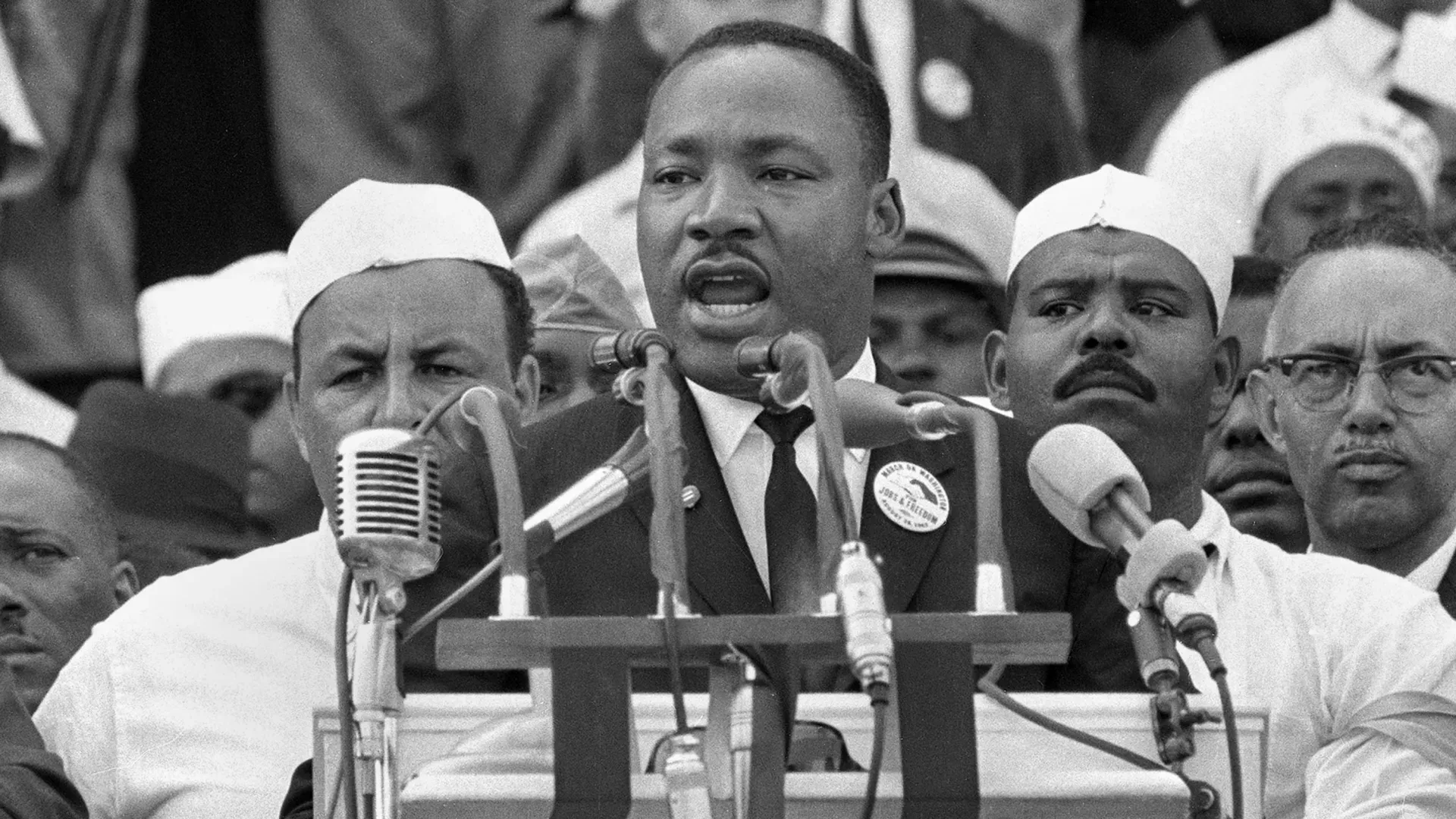
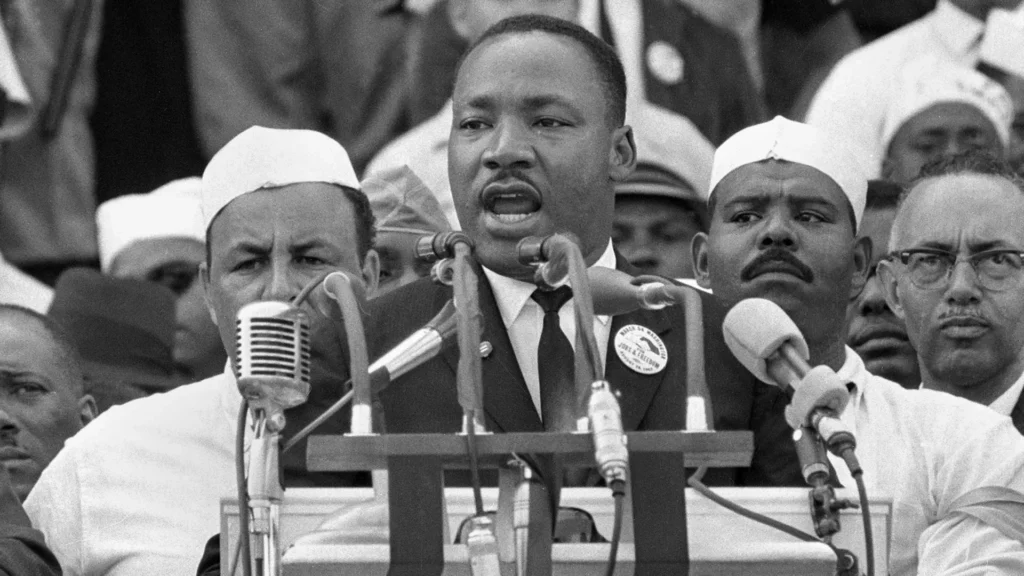
The August 28, 1963 March on Washington for Jobs and Freedom is the event that best describes King’s legacy. In order to call for an end to discrimination, more than 250,000 people gathered on the National Mall. The televised nation and the crowd were captivated by King’s “I Have a Dream” speech. He envisioned a future where his children would be judged “not by the color of their skin but by the content of their character” while standing at the Lincoln Memorial. The speech included references to the Bible, patriotic ideals, and urgent calls for equality. It exerted pressure on Congress to pass the Civil Rights Act of 1964, which outlawed discrimination in employment and public places. The march highlighted economic injustice too, linking racial equality to jobs and fair wages. King’s speech is still a cultural icon, and it is used in music by everyone from Common to U2 to show how powerful it is today.
Selma to Montgomery: Marching for Voting Rights
King sought voter suppression in Selma, Alabama, in 1965. To register, Black residents were subjected to violence, literacy tests, and poll taxes. On March 7 (also known as “Bloody Sunday”), when state troopers brutally assaulted peaceful protesters on the Edmund Pettus Bridge, the Selma to Montgomery marches began. King led subsequent marches, drawing national outrage. Protected by federal troops, the final 54-mile trek reached Montgomery’s capitol. The 1965 Voting Rights Act was the result of this pressure, and President Lyndon B. Johnson signed it. Johnson, prohibiting discriminatory behavior. Selma exemplified King’s persistence. He used his imprisonment as a platform for writings like Letter from Birmingham Jail, which he was arrested 29 times in total. It was written in 1963 and offered a justification for civil disobedience: “Injustice anywhere is a threat to justice anywhere.” Millions of people were given the right to vote, reshaping democracy.
The Nobel Prize, Poor People’s Campaign, and Assassination
King received the Nobel Peace Prize in 1964 at the age of 35, making him the youngest recipient at the time. He donated the $54,123 prize to his cause, rejecting personal wealth.
He later widened his fight. The 1968 Resurrection City encampment in Washington, D.C. marked the culmination of the Poor People’s Campaign, which addressed poverty across races. In his speech to the Riverside Church in 1967, King also opposed the Vietnam War and linked militarism to domestic neglect. On April 4, 1968, tragedy struck Memphis, Tennessee. James Earl Ray killed King on the balcony of a motel while he was standing by the side of striking sanitation workers. Despite the nationwide riots, Coretta and her allies turned their grief into action. Mahalia Jackson performed his favorite gospel hymns for 150,000 mourners at his funeral.
Legacy and the Creation of Martin Luther King Jr. Day
Laws, culture, and morality are still shaped by King’s legacy. After a 15-year campaign led by Coretta and figures like Hosea Williams, the King Holiday, which commemorates his birthday, was made official. By 1983, 20 states recognized it; universal observance followed.
President Jimmy Carter established a commission in 1979; Coretta testified, emphasizing service. The 1980 hit “Happy Birthday” by Stevie Wonder increased momentum. As a symbol of reconciliation, it is the only federal holiday honoring an African American today.
Modern Observance: Service, Reflection, and Relevance
Jr., Martin Luther King Now, Day requires national service. In 1994, Congress designated it a “Day On, Not a Day Off.” Initiatives like MLB’s “MLK Day of Service” and AmeriCorps projects engage millions in volunteering—tutoring, park cleanups, food drives.
Events include speeches, parades, and readings of King’s works. Atlanta hosts wreath-layings at his crypt; Memphis reenacts marches. Following COVID, the number of virtual observations increased, extending the reach. King’s words pose a new challenge in 2026 amid debates regarding police reform, racial equity, and voting rights. Issues like gerrymandering echo Selma; economic gaps persist despite progress. His Poor People’s Campaign inspires fights against inequality, from climate justice to tech divides.
Leaders all over the world, including Nelson Mandela in South Africa and anti-CAA protesters in India, cite King. The universal struggle for dignity is brought to light by parallels to caste struggles in India.
Continuing the Dream: A Call to Action
Dr. Jr., Martin Luther King Day is more than just a day of remembering; it is an act of activation. His methods are taught in schools, and diversity workshops are held by businesses. Yet, challenges remain—hate crimes rose in recent years, per FBI data, demanding vigilance.
King dreamed of a “Beloved Community” bound by justice. It requires daily nonviolence, such as speaking out against bias, mentoring young people, and diligent voting. “The arc of the moral universe is long, but it bends toward justice,” he observed, “if we push.” Honor King on January 19, 2026, by serving. Participate in a local event, read his sermons, or advocate locally. His light endures, guiding us toward equity.
For more details read this article.Book mark our website for more updates.
Join us on Facebook
Follow us on Instagram
Subscribe on Youtube
We are on Pinterest Now.