Chitradurga bus accident: Driver’s Split-Second Mistake Kills 9
On December 25, 2025, a tragic bus accident in the Chitradurga district of Karnataka claimed the lives of at least nine to ten people, leaving the nation in mourning. On NH-48 near Gorlath Cross in Hiriyur taluk, a private sleeper bus traveling from Bengaluru to Shivamogga collided head-on with a fuel tanker, igniting a massive fire that consumed the vehicle. This incident highlights the dangers of driving on India’s highways, where reckless driving, speeding, and poor vehicle maintenance frequently turn routine trips into catastrophes.
Incident Breakdown
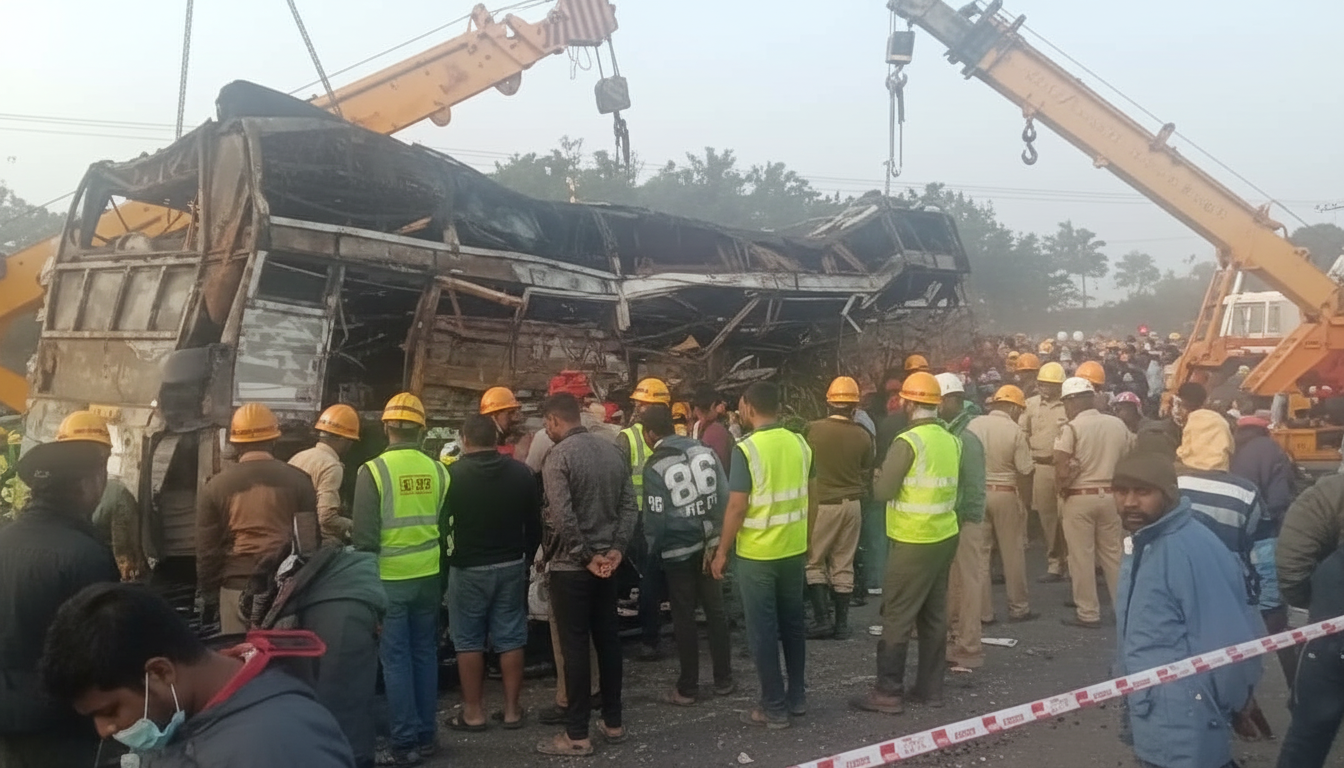
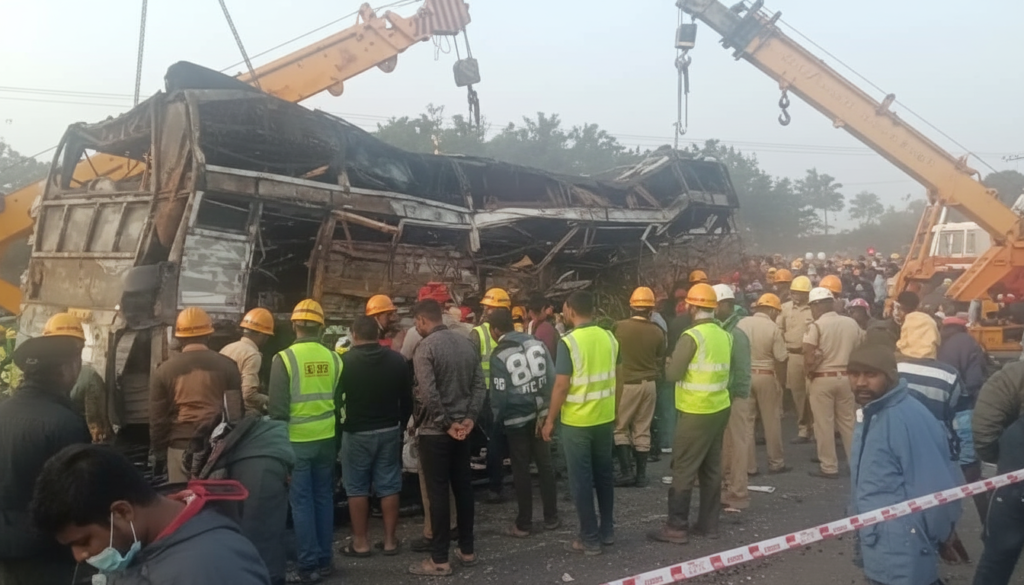
The collision occurred around 2:30-3:00 AM under cover of darkness, a time when driver fatigue peaks on long-haul routes. From 29 to 32 people boarded the Seabird Coach sleeper bus, many of whom were holiday travelers from coastal towns like Gokarna, Kumta, and Shivamogga. Eyewitness accounts reveal the fuel tanker, driven by Kuldeep, suddenly jumped the median divider, slamming into the bus near its fuel tank with devastating force. The impact caused the tank to burst, releasing fuel that quickly spread, engulfing asleep passengers in a blaze of smoke and flames. By simply brushing the wreckage, a nearby school bus carrying 48 students narrowly escaped the catastrophe. Its driver heroically pulled over and alerted authorities, ensuring all children remained unharmed. The bus has been burned to a skeleton in online video, with charred remains visible among twisted metal—a grim indication of the fire’s intensity. The initial police reports attribute the incident to the tanker driver’s carelessness, possibly as a result of excessive speed or drowsiness. This demonstrates how a split-second lapse can result in the loss of dozens of lives.
Casualties and Heroic Rescues
As the bus was consumed by flames before assistance arrived, estimates of the number of fatalities varied in the early hours, with fears of over 20 deaths. By morning, the authorities had confirmed the recovery of nine bodies, including children and women whose bodies had been burned beyond recognition. Over 20 others sustained injuries ranging from burns to fractures; they received urgent care at hospitals in Hiriyur and Chitradurga. Amazingly, the bus driver and conductor were able to escape by jumping out just before the fire reached its zenith, prompting a few passengers to safety. In the midst of exploding fuel remnants, the fire department and police, led by Chitradurga SP Ranjith and Inspector General BR Ravikante Gowda, launched a frantic rescue. Local villagers assisted, forming human chains to combat the blaze with whatever water was available. It’s possible that victim identification will require DNA testing, prolonging the agony of families as they search for loved ones at morgues. Prime Minister Narendra Modi expressed his grief by announcing Rs. 2 lakh in ex-gratia for relatives who had passed away and Rs. 50,000 for those who had been injured. This is standard assistance that is welcome but cannot restore shattered lives.
Broader Road Safety Crisis
This horror at Chitradurga is not a one-time occurrence; India’s roads kill more than 150,000 people each year, and Karnataka has killed more than 15,000 people in recent years. Due to potholes, narrow medians, and heavy truck traffic, NH-48, a vital Bengaluru-Mumbai artery, ranks among the deadliest. Fuel tankers like the one involved pose unique risks—their volatile cargo amplifies collisions into fireballs, as seen in past tragedies like the 2023 Punjab tanker blast.
Experts point to systemic failures: 70% of commercial vehicles flout fitness norms, drivers routinely exceed 12-hour shifts, and enforcement remains lax. The accident in Chitradurga follows a pattern: fires frequently reduce escape windows on nighttime sleeper buses due to their overcrowding of seats. Consider the following preventative insights for added value:
Mandatory Tech Upgrades: GPS trackers and dashcams could flag drowsy driving in real-time.
Stricter Median Barriers: On NH-48, the tanker may have been contained by crash-tested dividers.
Fire-Safe Buses: strict enforcement of emergency exits and materials that do not ignite.
Driver Wellness Checks: At tolls, sobriety and fatigue tests before the trip.
By using apps like RedBus to choose operators with high safety ratings, traveling at night when possible, and carrying whistles for quick alerts, passengers can help.
Official Actions and Community Grief
At the Hiriyur Rural station, a case was filed under the IPC for reckless driving and putting lives in danger. Forensic teams looked into skid marks and black boxes. Siddaramaiah, chief minister of Karnataka, promised increased highway patrols when he ordered a high-level investigation. Leaders of the opposition paid visits to hospitals and demanded accountability from transportation authorities. Grief rises in the coastal and Shivamogga districts, where funeral procession draws thousands and temples hold prayers. #JusticeForChitradurgaVictims, urging bus reform, is all over social media. We are reminded by this Christmas Day tragedy that safety is not optional. Highways must evolve from death traps to lifelines, blending tech, policy, and vigilance. Families want a resolution, but the real value is preventing the next news story.
For more details read this article.
Book mark our website for more updates.