

UGC’s Regulations 2026
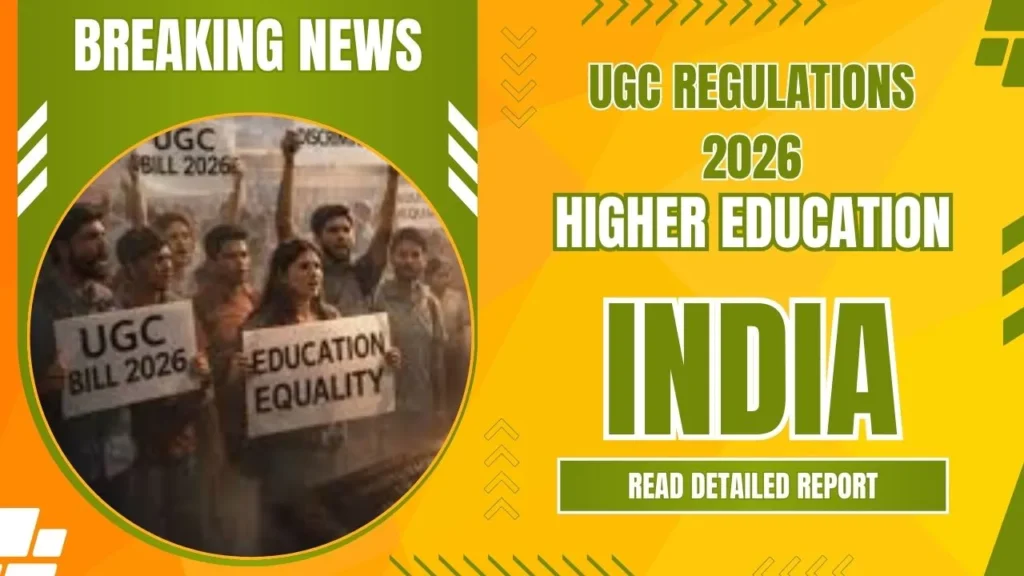
The University Grants Commission (UGC) issued the Promotion of Equity in Higher Education Institutions Regulations, 2026 on January 13, 2026, signaling a significant shift in India’s higher education landscape. The old rules from 2012 have been replaced by these new rules, which aim to end caste-based discrimination and make colleges and universities truly inclusive. UGC is holding institutions accountable for adhering to the equality principles enshrined in the Constitution by mandating structural changes like equity committees and Equal Opportunity Centres (EOCs). This comprehensive framework covers students, teachers, non-teaching staff, and administrators in all UGC-recognized higher education institutions (HEIs), from central universities to affiliated colleges. To close long-standing policy enforcement gaps, protections explicitly include Scheduled Castes (SCs), Scheduled Tribes (STs), and Other Backward Classes (OBCs) for the first time. These rules promise a safer and more equitable environment as campuses deal with overt and covert biases, but they are not without controversy, including a recent Supreme Court stay.

Why These Regulations Matter Now
Despite constitutional safeguards like Articles 14, 15, and 17, caste-based discrimination persists in Indian higher education. Segregation in classrooms, dining halls, and hostels was revealed by reports like the Thorat Committee (2007), which led to higher dropout rates among marginalized students—often 20-30% higher for SC/ST groups. Psychological costs, like the stigma associated with “reserved seats,” make academic stress worse and make it harder to move up socially. The regulations of 2026 change from advisory notes to enforceable duties, with individual liability for institution heads. This is in line with U.S. global equity standards and responds to the rising number of incidents on campuses, which have been made worse by social media. The UK’s equality law, Title IX. Equity is essential for national progress in a diverse nation like India, home to over 43 million students enrolled in higher education institutions.
Core Provisions: Breaking Down the Mandates
Every HEI is required to have Equal Opportunity Centres (EOCs). These hubs support disadvantaged groups through welfare programs and awareness campaigns, handle complaints about discrimination, and promote social inclusion. EOCs are required to operate online portals that can be accessed at any time, 24 hours a day, seven days a week, and to coordinate with organizations that provide legal aid in order to guarantee prompt action. Complaints must be resolved within 30 to 60 days. Equity Committees provide local oversight under EOCs. They are led by the head of the institution and include:
-
Three senior faculty members
-
One non-teaching staff
-
Two civil society reps
-
Two student invitees (merit-based)
Women, persons with disabilities (PwDs), SCs, and OBCs are all required to be represented, as are women. Cases are reviewed by committees twice a year, and recommendations for sanctions like suspensions or warnings are made.
| Component | Responsibilities | Reporting Timeline |
|---|---|---|
| EOC | Awareness campaigns, complaint intake, welfare coordination | Bi-annual to institution |
| Equity Committee | Case inquiries, policy advice | Meets 2x/year |
| Ombudsperson | Appeals from unresolved cases | Binding decisions |
Additionally, institutions must appoint Equity Ambassadors among students for peer sensitization and Equity Squads for patrols. Transparency is ensured by annual compliance reports to the UGC and a national monitoring committee.
Enforcement and Penalties: Teeth for Accountability
Unlike prior guidelines, non-compliance invites real consequences. UGC can:
-
Bar access to grants/schemes
-
Suspend degree-granting powers
-
Prohibit specific programs
-
Delist the institution entirely
The head is responsible for himself or herself and could be removed. A departure from soft recommendations is this “duty-based” approach.
| Violation Level | Penalty Example | Impact |
|---|---|---|
| Minor (e.g., delayed report) | Warning/funding cut | Financial strain |
| Repeated discrimination | Program suspension | Operational limits |
| Systemic failure | Derecognition | Existential threat |
Supreme Court Intervention: A Speed Bump or Reset?
The regulations were stayed by the Supreme Court on January 28, 2026, stating that they were “vague” and susceptible to misuse. The justices ordered an expert review and interim compliance with the rules from 2012 in response to ambiguous language regarding “caste-based discrimination,” which is defined as direct or indirect bias against SC/ST/OBC. Supporters worry that it delays justice, while critics praise it for preventing overreach. To avoid frivolous claims, this judicial pause highlights the necessity of precise drafting, such as clarifying “perceived discrimination.” However, this does not diminish the urgency; regardless, HEIs must prepare EOCs.
UGC’s Evolution: From Grants to Guardians of Equity
Standards and funding have long been managed by UGC, which was established in 1956 and emerged from the 1944 Sargeant Report. It has a chairman, vice-chairman, and ten members and oversees more than 1,000 universities. Its headquarters are in New Delhi. Based on this, the rules for 2026 transform UGC into an equity enforcer in the midst of NEP 2020’s diversity push. The SC/ST (Prevention of Atrocities) Act of 1989 and RTE 2009 serve as legal backstops, but there are still campus-specific gaps that have been filled.
Implementation Roadmap for Institutions
-
Notify and Form Structures: Appoint EOC coordinator within 30 days; constitute committee with required reps.
-
Awareness Drive: Mandatory workshops on equity; integrate into orientation.
-
Tech Integration: Launch helplines/portals; train staff on protocols.
-
Monitoring Setup: Prepare bi-annual reports; nominate ombudsperson.
-
Audit Readiness: Self-assess for compliance; budget for squads/ambassadors.
Despite the fact that resources may be a problem for small colleges, UGC promises capacity-building grants. It is supported by student organizations like NSUI/AISF because it empowers marginalized voices.
Challenges and Criticisms Ahead
Skeptics contend that enforcement varies—elite IITs and IIMs may comply superficially while state universities lag as a result of funding issues. Reverse discrimination fears (e.g., OBC quotas clashing with merit) fuel debate. Rural HEIs face staffing shortages for committees.
As a result of the absence of a centralized caste atrocity tracker, impact measurement is hampered. Training more than 10 million faculty is a daunting task, and success depends on sensitization rather than mandates.
Path Forward: Towards a Truly Inclusive Campus
Despite the stay, these rules show that India is committed to Article 46’s call for the empowerment of underprivileged groups. They could reduce dropout rates by 15-20%, increase leadership diversity, and serve as a model for global best practices if refined after the review. Students from Bahadurgarh to Bengaluru will find this to be true on campuses where talent prevails.
For more details read this article.Book mark our website for more updates.
Join us on Facebook
Follow us on Instagram
Subscribe on Youtube
We are on Pinterest Now.